Container Fleet Tops 34 Million TEU and Carriers Own 65% of It
BIMCO put global container fleet capacity at 8,000 TEU below the 34 million mark at the start of September. Forty-six ships totalling 286,000 TEU were scheduled for delivery during the month, so the threshold fell within days of the count being taken. The round number matters less than the rate behind it. The fleet has added 10 million TEU in five and a half years, a 42% expansion, against the previous 10 million TEU increment, from 14 million to 24 million, which took more than ten and a half years to arrive.
Two things produced that. Yards delivered at a record pace on orders placed when 2021 and 2022 freight rates made almost any newbuild look cheap. And owners stopped scrapping. The second half tends to get less attention, though it means capacity that should have left the market by now is still trading.
The Composition Shifted More Than the Total
Ships above 12,000 TEU delivered two-thirds of the added capacity. The largest vessels now hold 40% of fleet capacity against 30% in early 2021, and the average container ship has grown 14%. The ultra-large threshold drifted along with it. An 18,000 TEU vessel looked remarkable a decade ago; today it takes 20,000 TEU to sit in that class, with the biggest hulls just above 24,000 TEU.
That concentration limits where the new capacity can go. A 24,000 TEU ship is an Asia-Europe asset. It cannot call at most ports on secondary trades, and cascading it downward means displacing mid-sized tonnage into routes that were already covered. Each large delivery pushes capacity down the ladder, which is one reason headhaul and feeder rates tend to soften together rather than in sequence.
Carriers Own the Glut This Time
The ownership change gets the least attention and probably deserves the most. Liner operators took 85% of the 10 million TEU added since early 2021. They now control 65% of fleet capacity, up from 57%.
In earlier downturns, carriers protected margins by handing chartered tonnage back. The tonnage provider absorbed the idle time, the carrier shed the cost, and the adjustment ran through the charter market. That release valve is narrower now. Capacity sitting on a carrier’s own balance sheet has to be idled or run at a loss, and either way it shows up in that carrier’s results rather than somebody else’s.
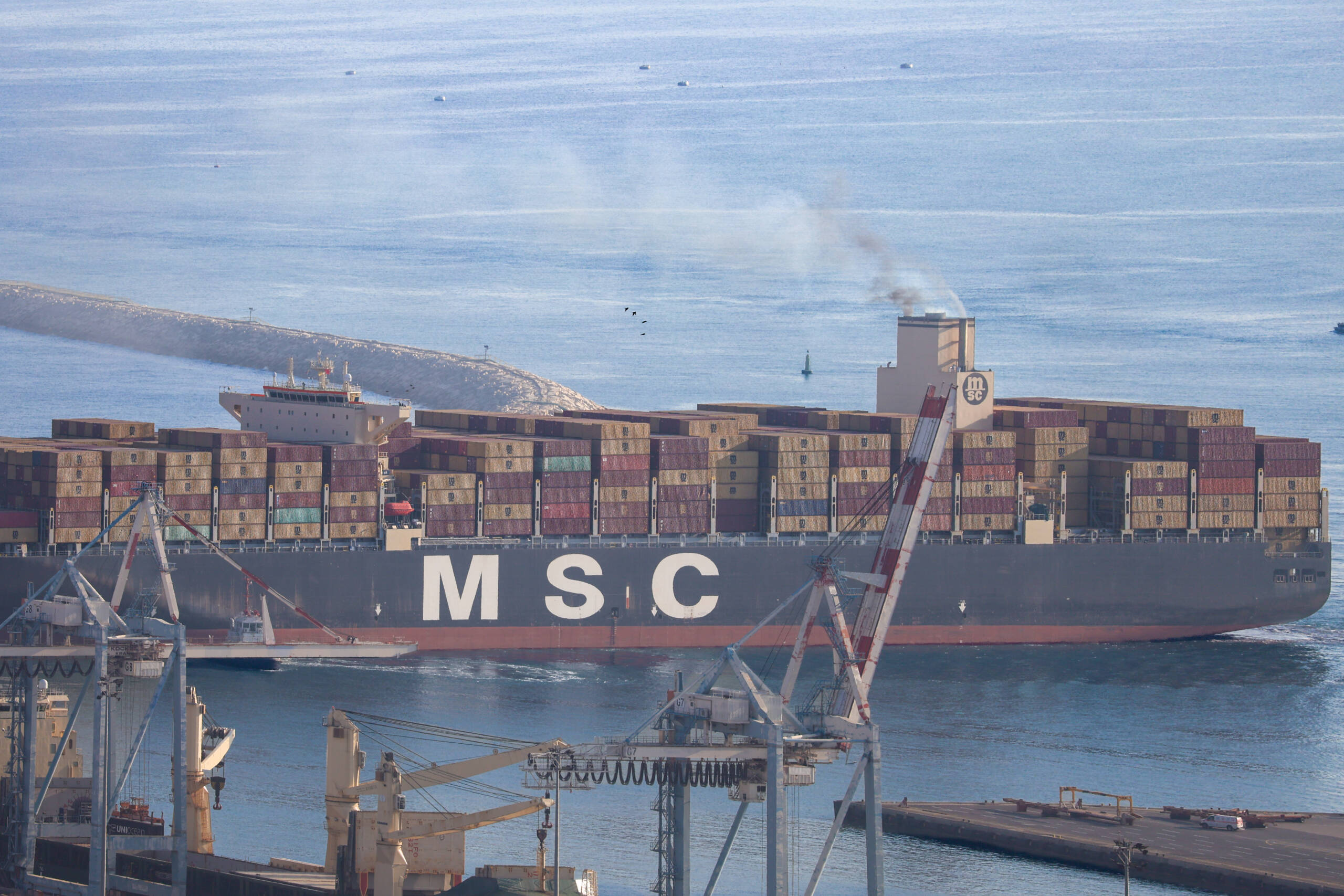
Scale is concentrated alongside it. The top eight carriers each operate above 1 million TEU and hold roughly 28 million TEU between them, most of the world fleet. MSC alone is near 7.4 million TEU, more than half again the size of Maersk. Concentration of this kind can support discipline through blank sailings and slower schedules. It can equally support the opposite, since a carrier with the balance sheet to outlast a rate war has some incentive to start one.
The Recycling Backlog and the Suez Overhang
Nearly 2,000 ships representing more than 5 million TEU have now passed 20 years of age. Within five years they will be at or beyond the historical average recycling age of 25, which makes them the obvious demolition pool. BIMCO’s projection is that the fleet could add another 10 million TEU over the same period and reach roughly 44 million TEU. Recycle every one of those older ships and supply growth still runs high.
Sitting over all of it is routing. Diversions around the Cape of Good Hope have quietly done the work that scrapping did not, absorbing capacity by lengthening voyages. Estimates of how much vary, but the mechanism is plain: the same cargo on a longer voyage needs more ships. If Red Sea transits normalize, that capacity returns to a market that is simultaneously taking delivery from a historically large orderbook. The supply shock would arrive without a single additional ship being built.
Carrier executives have been open about the overcapacity risk, and they have kept ordering anyway. Both hold together. Ordering is a bet on where unit costs sit in 2031, and a carrier that skips this cycle arrives at the far end with older, thirstier tonnage and a worse cost per slot than the ones that didn’t.
The ships are already ordered. The open question is what gets scrapped.