Why a TEU Is Not a Container, and Why the Distinction Moves Numbers
A port announces it handled ten million TEU last year. The natural reading is that ten million boxes crossed the quay. They didn’t. The real number was probably closer to six million, and depending on the port, a large share of those boxes never entered the country at all.
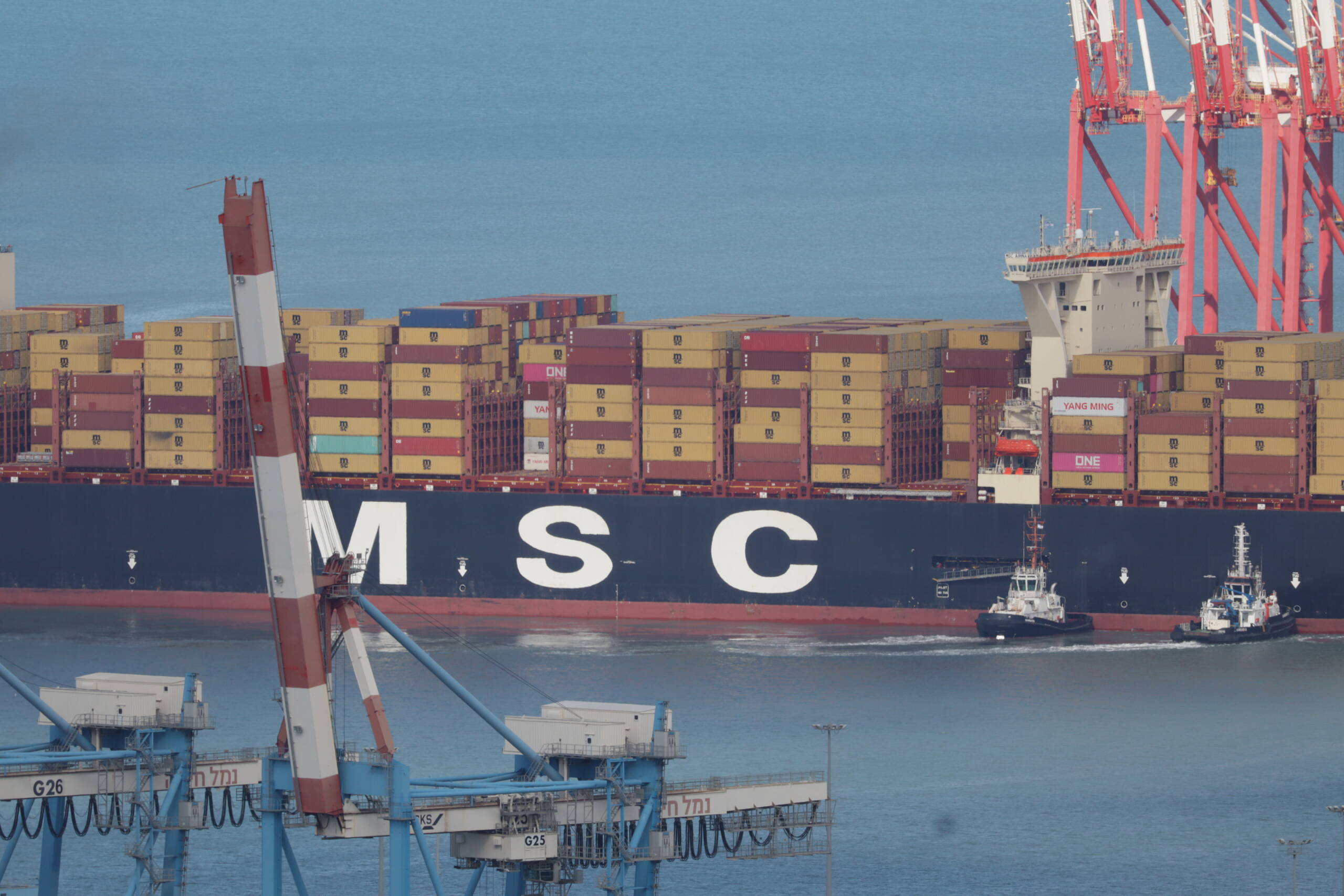
TEU stands for twenty-foot equivalent unit. It is a normalising unit, invented so that ports and carriers with mixed box lengths could compare capacity on one scale. It measures slot space. It does not count objects. Treating it as a headcount of containers is the single most common error in freight reporting, and it distorts everything downstream: labour math, congestion forecasts, revenue estimates, and port league tables.
One crane move is not one TEU
The 20-foot container is now the minority box in most trades. The workhorse is the 40-foot high cube, which counts as two TEU. Add 45-foot units, which some European statistics count as 2.25, and the average box on a modern deep-sea vessel lands somewhere around 1.7 TEU.
That ratio is where the trouble starts, because a crane doesn’t lift TEU. It lifts containers. Terminal productivity is measured in moves per hour, gang hours, and chassis pulls, all of which scale with box count. A port that grows TEU throughput 10 percent by carrying more 40s rather than more boxes has added almost nothing to its labour requirement. A port that grows the same 10 percent through short-sea traffic in 20-foot boxes has added a great deal.
This is why terminal congestion and TEU volume routinely diverge. Analysts watch the TEU line, see it flat, and conclude the yard should be clearing. Meanwhile the box count is up because the trade mix shifted, and the yard is choking.
The same applies on the road. A drayage truck moves one 40-foot container, which is two TEU. Highway trips, chassis availability and gate transactions scale with boxes, not with equivalent units. Any model that converts port TEU into truck movements without dividing by the box ratio overstates road demand by close to double.
Transshipment counts the same box twice
The second distortion is bigger than the first at hub ports. When a box is discharged from one vessel and loaded onto another, that is two container moves and it is counted as two throughput events. The box never leaves the terminal.
At the major transshipment hubs, this is not an edge case. It is most of the business. A hub can post enormous TEU figures that say almost nothing about the economy behind it, because the volume is relay traffic serving a region rather than cargo entering a market. Rankings of the world’s busiest container ports are therefore rankings of network position, not of trade demand. Comparing a transshipment hub to a gateway port on raw TEU is comparing an airline connecting hub to a destination airport on passenger count.
If you want import demand, you want gateway TEU, or better, laden import boxes. Those are different series and they move differently.
Empties inflate the same number
Global container flows are structurally imbalanced, so a meaningful slice of everything ports handle is empty equipment being repositioned back toward loading regions. Those empties are counted in throughput. They generate crane moves, yard space and drayage, so counting them is correct from an operations standpoint. They are also cargo-free, so counting them is misleading from an economic standpoint.
A quarter that shows rising TEU and falling laden imports is not contradictory. It usually means carriers are hauling boxes back to origin ahead of an expected demand cycle. The headline number goes up while the trade it supposedly represents goes down.
Nominal vessel capacity is a ceiling nobody reaches
Ship capacity is quoted in nominal TEU, calculated on the assumption of homogeneous boxes at a standard weight of roughly 14 tonnes each. Real cargo is not homogeneous. Dense cargo hits the deadweight limit long before the slots fill. Light cargo fills slots and leaves tonnage on the table. Reefer plugs, stability requirements and stack weight limits all bite before the nominal figure does.
So a 24,000 TEU vessel is a design specification, not a manifest. Utilisation figures built on nominal capacity systematically understate how full ships actually are, which matters when you’re trying to read whether carriers need to blank sailings.
Rates are quoted per FEU, volumes per TEU
This one costs money. The major spot indices quote container freight rates per 40-foot unit, the FEU. Port and carrier volumes are reported in TEU. Multiply one by the other and you have doubled your revenue estimate.
It sounds like an error nobody would make. It appears in published analysis regularly, usually when someone pulls a rate off an index dashboard and a volume off a port press release and puts them in the same spreadsheet cell. Check the unit on both sides before the multiplication, every time.
The high cube is invisible
A standard 40-foot box and a 40-foot high cube both count as two TEU. The high cube is about a foot taller and carries meaningfully more volume. As the fleet has shifted toward high cubes, actual cubic capacity has grown faster than the TEU series shows.
For cargo that cubes out before it weights out, which is most consumer goods, that gap is real capacity that never appeared in the statistics. Long-run TEU growth charts therefore understate how much volume the system can actually absorb.
What to ask
Before using any container figure, three questions settle most of it. Is this TEU or boxes? Does it include transshipment, and if so, is it counted once or twice? Does it include empties?
Sources that can’t answer those questions aren’t reporting a measurement. They’re repeating one.