Why Many Livestock Carriers Started Life as Car Carriers
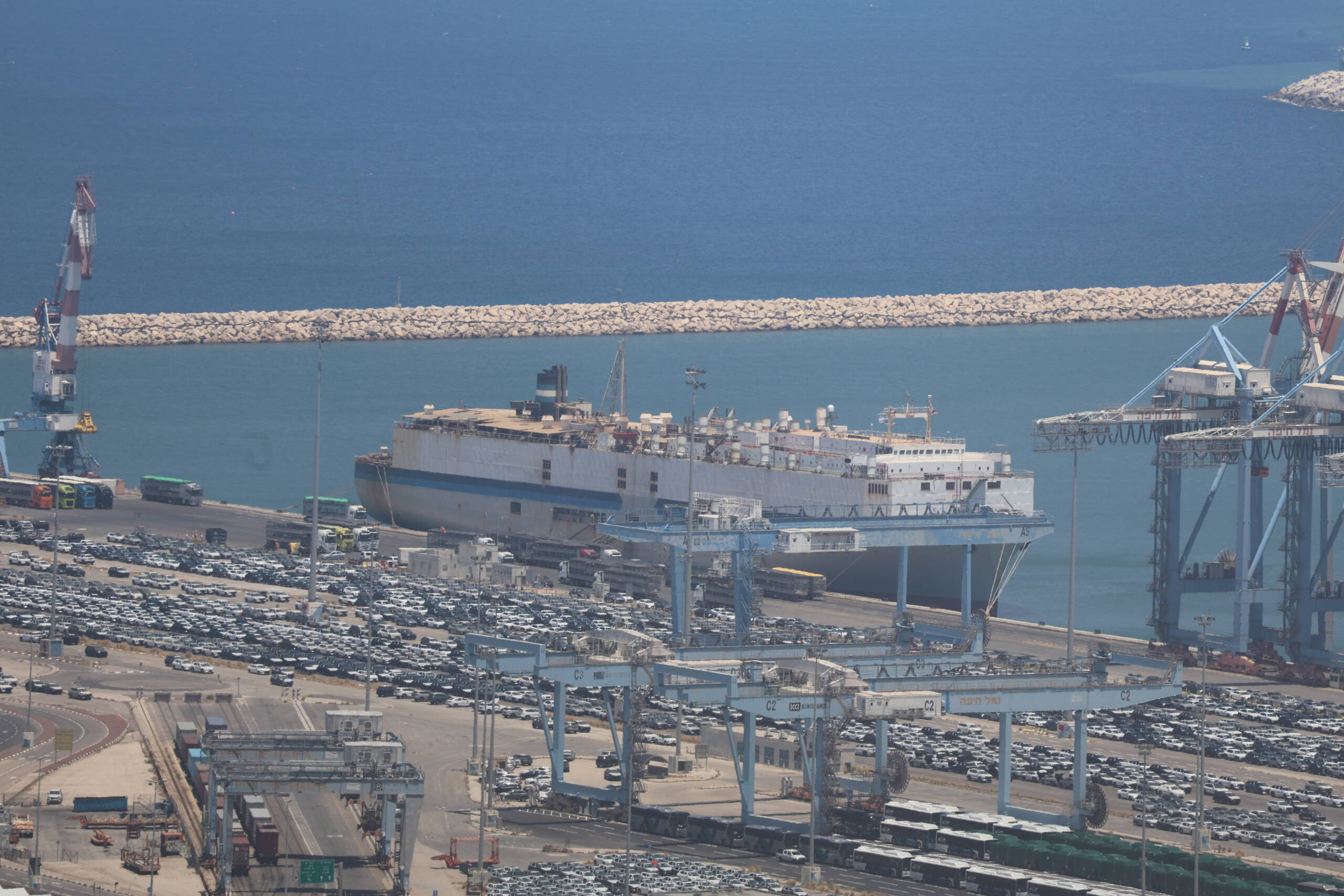
Walk along almost any port that handles livestock exports and you’ll notice something odd: the ships look a lot like car carriers. Tall, boxy hulls. High freeboard. Almost no portholes. A silhouette built for stacking, not for passengers.
That’s not a coincidence. A large share of the world’s livestock carrier fleet didn’t start out moving sheep and cattle at all — these vessels began life as Pure Car and Truck Carriers (PCTCs), the same ships used to ferry new vehicles across oceans.
The Logic of Conversion
Car carriers and livestock carriers solve a surprisingly similar engineering problem: how to stack a huge number of separate units on internal decks, move air through the whole structure, and load and unload quickly through ramps rather than cranes.
A PCTC’s internal architecture already offers:
- Multiple full-height decks running the length of the hull
- Stern and side ramps built for fast vehicle-style loading
- Structural decks designed to be subdivided or reinforced rather than gutted
- A hull shape optimized for volume over cargo weight, since cars (like livestock) are bulky rather than dense
Converting one of these ships into a livestock carrier mostly means retrofitting car decks into pens, adding fodder and water systems, upgrading ventilation and effluent handling, and installing veneer decks suited to animals rather than steel and rubber. The bones of the ship — hull, ramps, deck structure — often stay largely intact.
Why Not Build Purpose-Built Ships Instead?
Purpose-built livestock carriers do exist, but converting an aging PCTC is frequently the cheaper and faster path. Car carrier fleets age out of the vehicle trade well before the hulls themselves are structurally spent — newer, larger PCTCs replace them for car shipping, and the older tonnage becomes available at a fraction of newbuild cost. For an operator entering the livestock trade, or expanding capacity quickly, a secondhand PCTC hull is often the more economical starting point than commissioning a new vessel.
This is part of why older livestock carriers, some built in the late 1970s and early 1980s, are still visible working ports today — hulls that began their careers hauling sedans and pickup trucks, now decades into a second life hauling cattle and sheep across the same trade lanes.
The Visual Tell
Next time you see a boxy, high-sided ship at a port with a livestock-style loading ramp rather than container cranes, look closer. There’s a good chance you’re looking at a car carrier’s second act — the same silhouette, a completely different cargo.