Venice Runs Entirely on Boats: Inside the Grand Canal Freight System
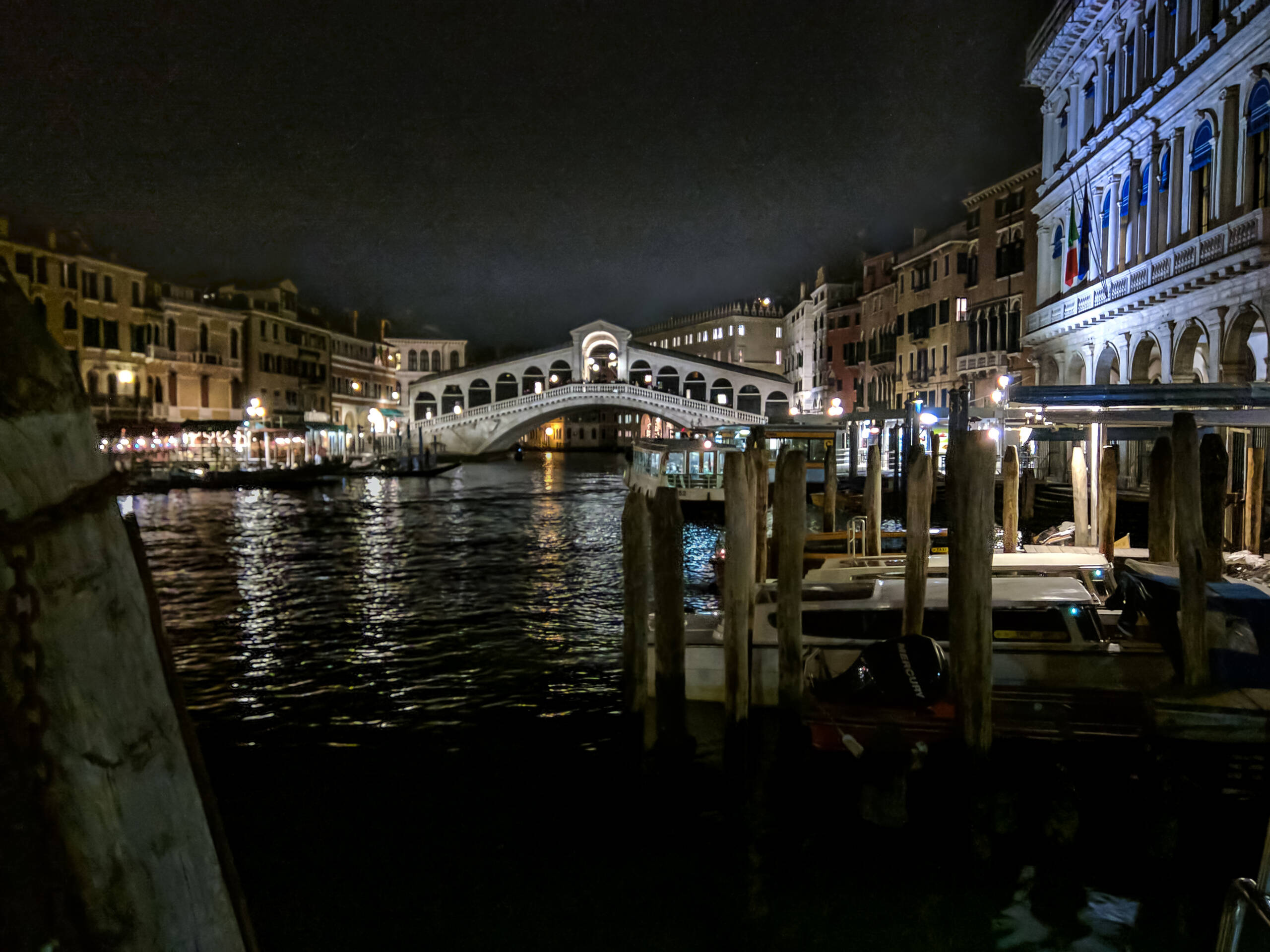
Every physical object in the historic centre of Venice arrived by hull. Bread, cement, hotel linen, restaurant deliveries, scaffolding, refuse going the other way, the coffin at a funeral. There is no road network behind the facade doing the real work. The canal in front of you is the road network, and the moored boats in this frame are the freight fleet at rest.
The system has three legs. Goods reach the edge of the lagoon by road at Mestre and Marghera, transfer to flat-decked motor barges at the port or at Tronchetto, and then run into the city by water. The final leg is a handcart. A two-wheeled trolley hauled up and over step bridges by a man on foot is the last mile of one of the most visited cities in Europe, and no amount of technology has displaced it, because the bridges are protected structures and the alleys are a metre and a half wide in places.
That third leg sets the economics. Handling costs in Venice run at a multiple of comparable mainland delivery, because every consignment is touched more times: road to barge, barge to quay, quay to cart, cart to door. Cost scales with transfers, not with distance, and the distances here are trivial.
Timing is the second constraint. Commercial traffic is concentrated in the early morning, before the passenger vaporetti and the tourist flow saturate the canals, which compresses the working day for the freight operators into a few hours. Miss the window and you are competing for canal space with public transport that has right of way and a timetable.
Tide is the third. The lagoon runs roughly a metre of tidal range on ordinary days, more under acqua alta or a strong sirocco. Air draft under the smaller bridges falls with a high tide, so certain routes close to loaded barges for part of the day. Draft under keel falls at low water, so the shallower side canals close at the other end of the cycle. A route that works at nine in the morning may not work at noon.
Waste collection illustrates how far the system has to bend. Household refuse in much of the centre is collected on foot, door to door, by operators who then consolidate it onto barges at set collection points. There are no wheeled bins on the fondamenta because there is nowhere for a truck to take them.
The strategic problem is redundancy, or the absence of it. A road network degrades gracefully: block one street and traffic reroutes. A canal network has far fewer alternative paths, and several of them are dead ends. A sunk barge, a collapsed quay wall, or a maintenance closure on a main canal removes capacity that cannot be replaced by another mode, because there is no other mode. The mooring piles in this photograph are not decoration. They are the parking and loading infrastructure of a city with no kerbside.