Towage and Pilotage: Why Marine Service Fees Decide Which Ports Win Transshipment Cargo
A mid-size container ship with working bow thrusters, a competent master and a pilot on the bridge does not, on a calm afternoon, need two tugs to leave a harbour. It takes them anyway. The reason is not seamanship. It is that the port’s marine services regime priced a low-probability failure and decided the shipowner would pay for it on every movement, every day, whether the wind blows or not.
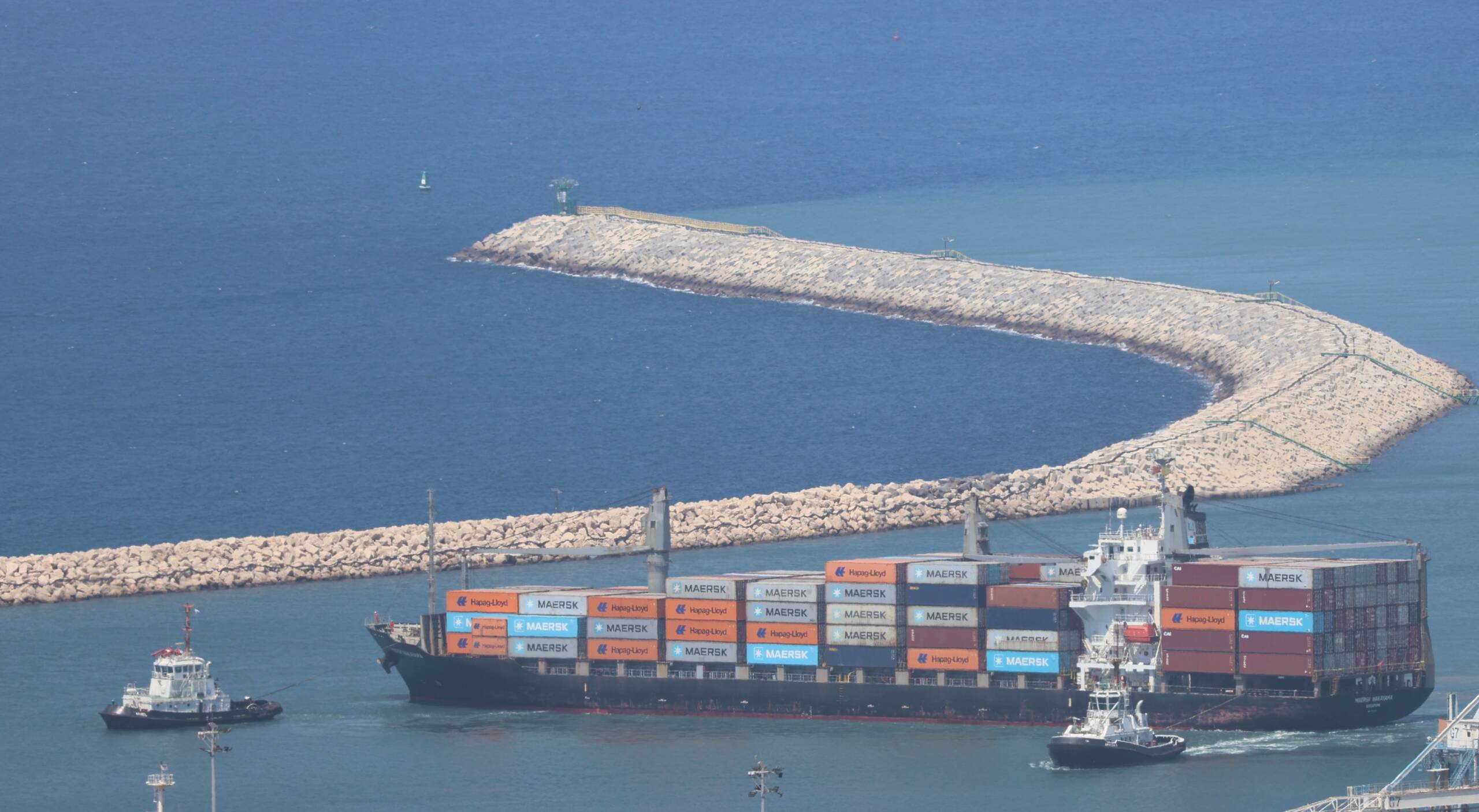
That decision compounds. Towage and pilotage are among the few costs of a port call that scale with the ship rather than the cargo, and in the transshipment trades that asymmetry is doing more to shape network design than most of the terminal-side automation that gets written about.
The tug alongside is insurance, not propulsion
Harbour towage regimes are written around a matrix. Length overall, beam, gross tonnage, deadweight, cargo type, availability of bow and stern thrusters, and the prevailing wind and current limits together produce a number of tugs and a minimum bollard pull. Ports publish these as standing requirements and pilots apply them with limited discretion. The output is deterministic: a vessel of a given size in a given channel gets a given tug allocation.
The requirement exists because the failure modes are catastrophic and fast. A steering gear failure or an engine that will not answer astern in a confined approach channel gives a pilot seconds, not minutes. The tug made fast forward is there to convert that into a recoverable situation. Most of the time it does nothing except burn fuel at idle and follow the ship out.
This is worth stating plainly because it explains why towage pricing looks irrational when you compare it to the work performed. You are not buying propulsion. You are buying standby capacity against channel blockage, hull damage, oil spill liability and the reputational loss a port takes when its approach closes for a week.
Escort towage and harbour assist are different products
The terminology gets collapsed constantly, including in port tariffs, and the two services have different cost structures.
Harbour assist is low speed work near the berth. The tug pushes, pulls and holds while the ship is manoeuvred into position. Bollard pull is the headline figure and the tug spends most of its time in direct mode, applying force roughly along its own axis.
Escort towage happens at transit speed, typically in a laden tanker or gas carrier moving through a restricted channel, and the tug is made fast aft and running with the ship. The work is done in indirect mode, where the tug angles its hull to the water flow and uses hydrodynamic lift from the hull and skeg to generate steering and braking force far in excess of its bollard pull. That capability has to be designed in. Escort-notation tugs carry deep skegs, high freeboard forward, reinforced staple and winch arrangements, and a hull form optimised for a condition that a standard harbour tug will never enter.
The propulsion labels are also routinely muddled. An ASD tug is an azimuth stern drive: the thrusters sit aft, the towing point is forward, and the boat works over the bow. A tractor tug puts the propulsion forward of midships, either Voith Schneider or azimuthing, and tows over the stern. There is no such thing as a single ASD tractor configuration, and the difference matters operationally because the arrangement determines which quadrant the tug can safely work in and how quickly it can transition between direct and indirect modes. Reverse-tractor and rotor-type hybrids exist precisely to buy back the quadrant each pure arrangement gives up.
The economics are a peak-load problem
A modern harbour tug in the 60 to 80 tonne bollard pull class is an eight-figure asset with a crew of four to six who are on station whether or not a ship is moving. Fuel, insurance, classification, drydocking and crew wages accrue continuously. Utilisation, measured as hours actually on the wire, is low. A tug might do three or four jobs in a day and spend the rest of the time at the tug berth.
The fleet cannot be sized to average demand. It has to be sized to the largest vessel the port is willing to accept, the worst weather it will still work in, and the possibility of two large movements coinciding. Every marginal increment of capacity in that fleet is bought to cover a tail case and is idle the rest of the time.
That is why towage tariffs look expensive per hour of visible work. The operator is recovering the cost of standing capacity across a small number of billable movements. It is also why towage markets consolidate: scale across multiple ports lets an operator move tonnage, share crews and spread the peak, and a single-port independent cannot compete with that on price without cutting the redundancy that made the service worth buying.
Pilotage sits alongside it with the same peak-load structure and usually a stronger legal position. Compulsory pilotage is the norm in commercial ports, fees are typically assessed on gross tonnage against a published tariff, and the provider is frequently a statutory body or a closed corporation of licensed pilots rather than a competitive market. Where competition has been introduced, it has generally been in towage rather than pilotage, and it has produced recurring disputes about whether a second entrant can be viable without free-riding on the incumbent’s obligation to serve.
Why this lands hardest on feeders
Here is the part that shapes networks. Port dues, pilotage and towage are assessed on the vessel. Terminal handling is assessed on the box. A 20,000 TEU ship pays more marine service cost per call than a 2,000 TEU feeder, but nothing like ten times more, and it discharges vastly more containers to spread it over.
Run that through a transshipment hub and the arithmetic is brutal. The feeder leg pays a marine cost per container that can be a multiple of the mainline leg’s. Every relay adds a fresh set of vessel-based fees. A hub that wants relay cargo is competing not on crane productivity but on the total cost of a call, and the marine services line is one of the few components it can move quickly, because it is set by tariff rather than by capital already sunk in quay and cranes.
Ports do move it. Tug fee caps for transshipment vessels, banded pilotage discounts, waivers for ships using thrusters within defined limits, reduced escort requirements for vessels with redundant propulsion, and volume rebates for carriers committing to a call frequency all appear in published tariffs. They are competitive instruments, and they are cheaper for a port authority to deploy than another berth.
The constraint is that the tug fleet still has to exist. Discount the tariff far enough and the operator either exits or thins the fleet, and the port discovers the cost of the insurance policy it stopped paying for the first time a laden ship loses steering in the entrance channel.
Automation is the obvious pressure valve, since crew is the largest recurring cost in the towage line, and remote-operated and reduced-crew tug trials have been running in several European and Asian ports. The regulatory path is slow, the classification questions are unresolved, and the capability being automated is the one that only matters in the situation nobody has scripted. That is not a promising profile for early deployment.
So the two tugs stay. They are not there for the day you can see. They are there for the one you cannot.