China's Panama Canal Gambit: How a Port Dispute Became a Geopolitical Flashpoint
China’s National Development and Reform Commission (NDRC) — the country’s powerful central economic planner — summoned executives from Maersk and Mediterranean Shipping Company (MSC) last month and delivered an unambiguous message: cease operating the Balboa and Cristóbal ports on the Panama Canal immediately. The Financial Times confirmed the directive on April 15, citing two people familiar with the talks. Neither shipping group, nor Beijing’s foreign ministry, had responded publicly by the time of publication.
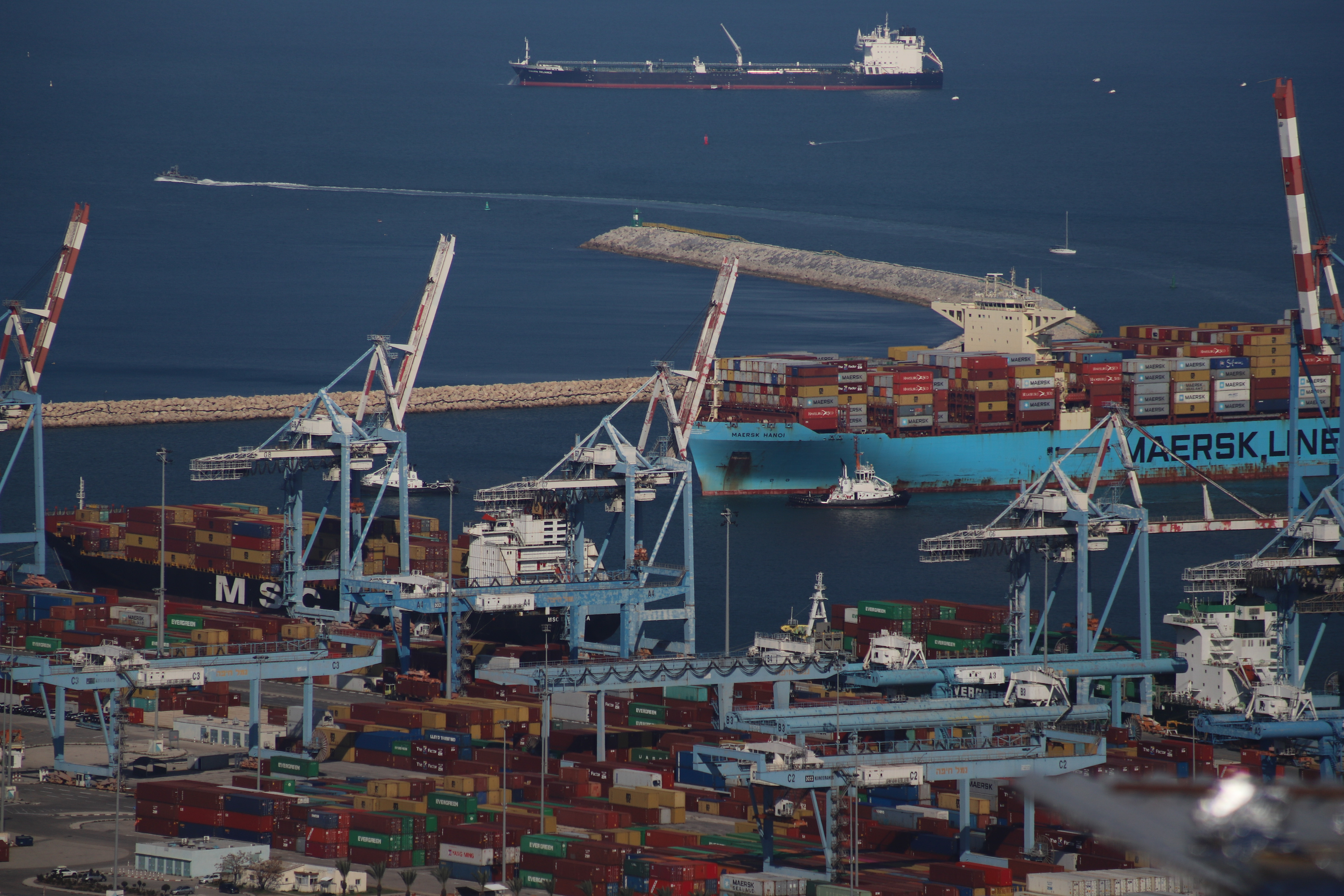
The demand is extraordinary in scope. Maersk and MSC are, between them, the two largest container shipping operators on earth. They are not fringe actors Beijing can easily intimidate without consequence to its own trade flows. And yet China issued the order anyway — a measure of how acutely it views the transformation of canal port control from a Chinese-linked operator to a pair of Western ones as a strategic defeat that cannot go unchallenged.
To understand why Beijing is willing to play this card, and what it means for the future of global maritime infrastructure, it is necessary to trace the full arc of events that brought things to this point.
The CK Hutchison Concession: Two Decades of Quiet Influence
For over twenty-five years, the ports of Balboa (Pacific side) and Cristóbal (Atlantic side) — the two terminals that bracket the Panama Canal’s entry and exit points — were operated by Panama Ports Company (PPC), a subsidiary of CK Hutchison Holdings, the sprawling Hong Kong conglomerate controlled by the Li Ka-shing family. The concessions, awarded in the 1990s, were commercially legitimate and functionally unremarkable for most of their duration. PPC ran the terminals efficiently enough that the arrangement attracted little scrutiny.
That changed as US-China tensions escalated through the 2010s and accelerated under the Trump and Biden administrations. Washington began to reframe CK Hutchison’s presence at the canal not as a commercial arrangement but as a strategic one — an assertion that, because the Li family is based in Hong Kong, which is subject to Beijing’s national security laws, Chinese state interests effectively extended to the two most critical port chokepoints of the Western Hemisphere’s most important shipping artery.
The argument was not without factual complexity. CK Hutchison is a private conglomerate, not a state enterprise. But in the post-2020 geopolitical climate — where the distinction between private Hong Kong capital and Beijing’s interests has become genuinely murky — Washington’s framing gained traction. Trump, in his second term, made reclaiming the canal a rhetorical centerpiece, repeatedly claiming China was “operating” it. Panama rejected this characterization. So did Beijing. But the political pressure was relentless.
The Supreme Court Ruling: January 2026
The tipping point arrived on January 29, 2026. Panama’s Supreme Court published its ruling in the Official Gazette: CK Hutchison’s concessions for Balboa and Cristóbal were unconstitutional. The contracts were ordered cancelled. The court’s legal rationale centered on procedural and constitutional deficiencies in how the original concessions had been structured, but the geopolitical context was impossible to ignore — US media outlet Axios had reported in advance that the White House was expecting exactly this outcome.
CK Hutchison’s response was immediate and indignant. The conglomerate called the executive decree “unlawful,” initiated international arbitration proceedings against Panama, and warned that any attempt by Maersk or its subsidiaries to operate the ports without its agreement would “likely result in legal recourse.” The Hong Kong-listed shares of CK Hutchison closed 2.6% lower following the news.
Panama’s government, for its part, moved with remarkable speed. Within hours of the formal publication, it issued Executive Decree No. 23, assuming direct state control of both facilities — cranes, vehicles, computer systems, software — under the justification of “urgent social interest” and continuity of operations. The interim contracts were awarded shortly thereafter: APM Terminals, Maersk’s port operating arm, took on Balboa; Terminal Investment Limited (TIL), the port division of MSC, took on Cristóbal. Both arrangements were structured for eighteen months, during which Panama’s Maritime Authority would organize an international tender for permanent concessions worth potentially billions of dollars. The financial terms for Balboa alone were documented at approximately $26.1 million for the interim period.
Washington publicly framed the ruling as a victory. It was, in narrow terms: the canal’s flanking port infrastructure had been transferred from a Hong Kong-linked entity to two European-headquartered shipping multinationals with no plausible Chinese state connection.
Beijing’s Countermoves: Escalation in Stages
China’s response was neither immediate nor undifferentiated. It came in a sequence of escalating pressure steps that, taken together, reveal a coherent if ultimately limited strategic playbook.
Diplomatic warning. Beijing’s initial response was a direct threat to Panama: reverse course or “pay a heavy price both politically and economically.” This was the bluntest available instrument — and its immediate effect was essentially zero. Panama, under sustained US pressure and with its Supreme Court having already spoken, was in no position to reverse direction even if its government had wanted to.
State firm freeze. Chinese authorities directed state-owned enterprises to suspend discussions on new investment projects in Panama. This carries real weight over a long horizon — Chinese capital has been significant in Central American infrastructure — but its short-term operational impact on the port dispute was negligible.
Shipping company pressure. Bloomberg reported that Chinese authorities had advised state-owned shipping firms to consider diverting cargo away from Panamanian ports where the cost implications were limited. This is the language of economic signaling: not a hard mandate, but a directional nudge that carries the implicit weight of political expectation when it comes from a state planner.
The COSCO withdrawal. On March 10, COSCO Shipping Lines informed clients that all arrivals and departures at Balboa would cease with immediate effect, with previously confirmed bookings cancelled. The company redirected transhipment activity to Buenaventura, Colombia, on the Pacific coast. COSCO’s move was more symbolic than operationally transformative: Maersk already handled between 75 and 80 percent of container throughput at Balboa, meaning COSCO’s absence left the port’s overall traffic largely intact. But the symbolism mattered — a Chinese state carrier visibly and publicly refusing to use infrastructure now operated by Western competitors was a statement of principle, not just logistics.
The ministry summons. On the same day COSCO withdrew, China’s Ministry of Transport summoned the executive leadership of both Maersk and MSC for discussions on “international maritime transport business practices.” In the dry language of Chinese regulatory communication, this is a serious escalation. A ministry summons in Beijing — particularly one framed around conduct in sectors the state considers strategically vital — is not an invitation to dialogue. It is a warning shot.
The NDRC directive. The most recent and most forceful step, revealed by the Financial Times on April 15, came in a March meeting with China’s National Development and Reform Commission — the apex body of Chinese economic planning. In that meeting, Maersk and MSC were told directly to withdraw from Balboa and Cristóbal immediately, and admonished not to engage in “illegal activities that harm the interests of Chinese companies” or violate “commercial ethics and international rules.” The framing is notable: Beijing is not acknowledging that the Panama court ruling has any validity. It is treating the occupation of formerly CK Hutchison-operated ports as an ongoing legal wrong — one it expects Maersk and MSC to remedy voluntarily.
The Impossible Position of Maersk and MSC
No two companies are more poorly positioned to navigate this dispute than the pair Beijing has chosen to pressure.
Maersk is the world’s second-largest container shipping operator. Its revenues and volumes are deeply intertwined with trans-Pacific trade flows, Chinese manufacturing exports, and access to Chinese ports across its network. China is not a market Maersk can afford to alienate. APM Terminals, its port operating subsidiary, also has facilities in Shanghai, Tianjin, and other Chinese ports — exposure that Beijing could theoretically complicate through regulatory friction.
MSC recently became the world’s largest container shipping group by fleet size. Its port arm, TIL, likewise has infrastructure interests across Asia. Like Maersk, it cannot treat the Chinese market as disposable.
At the same time, both companies accepted their Panama contracts through a legitimate legal and governmental process. Walking away from those contracts in response to Chinese pressure would expose them to breach claims from Panama, reputational damage in Western markets and among US counterparties, and the precedent-setting signal that Beijing’s extraterritorial regulatory pressure can override lawfully awarded government contracts in third countries. That precedent, once established, would be exploited again.
There is no clean exit. Comply with Beijing and face legal and commercial blowback from Panama and Washington. Refuse to comply and face Chinese regulatory pressure across their global networks. Both companies have so far maintained public silence — likely the only defensible posture while they assess their options and consult legal counsel.
The US-Panama Security Dimension
The ports dispute does not exist in isolation from a broader bilateral reconfiguration between Washington and Panama City. In the first weeks of April 2026, US and Panamanian officials advanced a series of bilateral agreements that went well beyond port administration. The deals included provisions for US troop deployments at Panama Canal facilities and toll-free passage for US military vessels — a structural shift in the security architecture of the canal zone that, in effect, begins to re-establish a US military footprint in the country it vacated in 1999 when it transferred full sovereignty of the canal to Panama.
From Washington’s perspective, this is mission accomplished: the port infrastructure is no longer in Chinese-adjacent hands, US military access is being re-established, and the geopolitical claim that China had been using CK Hutchison as a proxy for influence over the canal — while disputed by all parties — has been preemptively neutralized by structural change. Whether or not the premise of Chinese state control was ever accurate, the arrangement through which it could have been exercised has been dismantled.
From Beijing’s perspective, this sequence of events reads very differently: a US-directed legal and political operation, executed through Panama’s judiciary, that displaced Chinese-linked commercial interests from strategic infrastructure in a third country, to be replaced by Western operators under expanding US military protection. This is not how China frames it publicly, but this is the operational reality it is responding to.
The Broader Stakes: Port Infrastructure as Geopolitical Asset
The Panama Canal dispute should be understood as an episode in a much longer contest — one playing out simultaneously in ports and maritime infrastructure across the Indo-Pacific, East Africa, the Mediterranean, and Latin America.
China’s Belt and Road Initiative systematically targeted port infrastructure globally, with mixed but real results: Hambantota in Sri Lanka (now Chinese-leased), Piraeus in Greece (under COSCO management), Djibouti (with a Chinese naval base adjacent), and dozens of other facilities where Chinese state capital has taken stakes, concessions, or operational roles. The strategic logic is not subtle: whoever operates port infrastructure has first-mover intelligence on cargo flows, the ability to prioritize or deprioritize traffic, and, in extremis, the physical capacity to deny access.
Washington has spent the better part of a decade trying to counter this positioning — through diplomatic pressure, alternative financing via the Blue Dot Network and the US International Development Finance Corporation, and in this case, through direct legal-political engineering of Panama’s domestic judicial outcome. The result at the canal is, for now, a Western operational win. But the contest has not ended; it has moved to the next theater.
For global shipping companies, the lesson is sobering. What was once the domain of commercial decision-making — where to call, which ports to operate, which concessions to bid for — has become a domain of geopolitical risk that can transform a routine interim operating contract into the subject of directives from a major power’s central economic planning body. Maersk and MSC did not go looking for this confrontation. They accepted government contracts from a sovereign state following a court ruling. They are now in the crosshairs of a state with $18 trillion in GDP and leverage over a substantial portion of their revenue.
The Arbitration Overhang
CK Hutchison’s international arbitration proceedings against Panama remain unresolved and add a further layer of uncertainty. The conglomerate argues that the cancellation of its concessions was unlawful under international investment law, regardless of Panama’s domestic constitutional ruling. If arbitrators agree, Panama could face substantial financial liability — potentially billions of dollars in compensation for the value of the terminated contracts.
This outcome would not restore CK Hutchison’s operational position, but it would inflict real fiscal damage on Panama and send a chilling signal to developing countries considering cancelling Chinese-linked infrastructure concessions under US political pressure. The arbitration, in this sense, is China’s longer-game insurance policy: even if the port battle is lost, the legal proceeding can make the next similar move in the next similar country considerably more expensive.
What Happens Next
Several possible trajectories are now in play, none of them clean.
The most likely near-term outcome is continued stalemate: Maersk and MSC remain in place, China continues to apply pressure short of outright trade retaliation, COSCO stays out of Balboa, and the arbitration grinds forward over years. Panama proceeds with its international tender for permanent operators — a process Beijing will almost certainly attempt to influence, either by lobbying against the granting of concessions to Western firms or by ensuring a Chinese-linked entity is positioned as a credible bidder.
A more disruptive outcome would involve China escalating from regulatory pressure on Maersk and MSC to concrete commercial retaliation — delays at Chinese ports, regulatory inspections of their vessels, friction in customs clearance. This would be a significant escalation, with collateral damage to Chinese exporters who depend on these carriers. Beijing has used such tools before against South Korean, Australian, and Lithuanian companies, but deploying them against the world’s two largest container shipping groups would be a different order of magnitude.
The question of whether Maersk or MSC ultimately withdraw — voluntarily or under sufficient pressure — cannot be ruled out. Both companies have boards and shareholders attentive to China market risk. If Beijing indicates that continued operation of the Panama ports would carry sustained and material costs to their China business, the commercial calculus could eventually shift. This is presumably what Beijing is betting on.
Conclusion: The Canal as a Mirror
The Panama Canal has always been more than a waterway. It is a mirror in which the great power politics of each era reflects itself. In the early twentieth century it was an American imperial project, carved through a newly independent Panama by a president who had quietly encouraged that independence specifically to enable the canal’s construction. In the late twentieth century it was a symbol of decolonization and sovereign recovery, returned to Panamanian control in 1999 under the Carter-era treaties. Now, in the mid-2020s, it is a theater of US-China strategic competition — with port terminals, court rulings, state-planner directives, and military access agreements as the instruments of contest.
China’s demand that Maersk and MSC withdraw is, at its core, an assertion that the rules-based international order — the framework Beijing routinely invokes when it serves its interests — does not apply when a third country’s court ruling, under US political pressure, removes Chinese-adjacent commercial interests from strategic infrastructure. It is an argument about whose rules apply and who gets to enforce them.
That argument is not going to be resolved at the ports of Balboa and Cristóbal. But it is being made there, loudly, for an audience that extends far beyond Panama. Shipping companies, port operators, infrastructure investors, and governments across the developing world are watching how this plays out — and calibrating accordingly.
The canal, as always, runs through the middle of a much larger story.