War Risk Pricing Enters the Container Economy: MSC Adds $4,000 Surcharge on Africa Shipments
Global shipping rarely signals geopolitical stress more clearly than when carriers start attaching war surcharges to containers. Mediterranean Shipping Company, the world’s largest container carrier, has now done exactly that, introducing a war-risk surcharge of up to $4,000 per container on cargo moving to parts of Africa and the Indian Ocean region. In the language of logistics this is a small notice in a tariff schedule, but in practice it is one of the most direct indicators that maritime security risks are reshaping the cost structure of global trade.
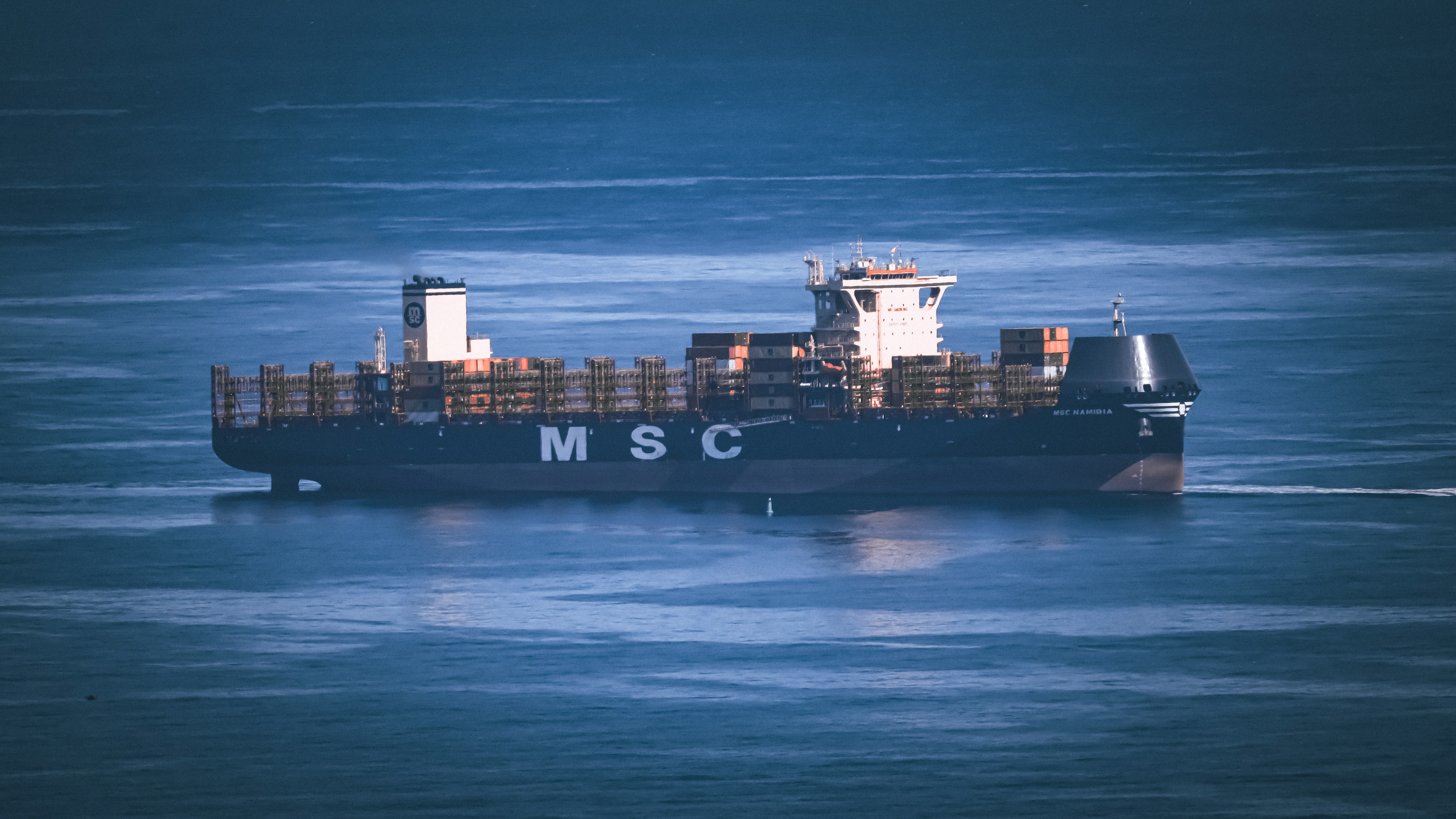
The surcharge applies primarily to shipments originating from Gulf states and heading toward African markets. According to the pricing structure announced by the carrier, dry 20-foot containers face an additional charge of roughly $2,000, while 40-foot containers rise to around $3,000. Refrigerated containers — which typically carry food, pharmaceuticals, or temperature-sensitive cargo — can reach the top end of the scale at approximately $4,000 per unit. Cargo moving from the Indian subcontinent toward Africa is affected as well, although at lower levels, with additional fees typically around $500 per standard container and roughly $1,000 for refrigerated equipment.
Behind the pricing adjustment lies a maritime environment that has become increasingly volatile across several strategic corridors linking Asia, the Middle East, and Africa. Shipping lines are navigating a complex set of risks stretching from the Strait of Hormuz to the Bab el-Mandeb chokepoint near the Red Sea. These routes handle a large share of global energy shipments and container traffic, and any escalation in military tensions or attacks on commercial vessels immediately translates into higher insurance premiums, security requirements, and operational uncertainty for carriers.
For a container line operating hundreds of ships and moving millions of containers each year, even a modest rise in risk exposure can quickly cascade into significant financial costs. Insurance underwriters may demand war-risk premiums, ships may need to reroute or sail under heightened security protocols, and voyages may become longer and more fuel-intensive if carriers avoid high-risk waters. In that context, the surcharge functions as a mechanism to redistribute these costs across the cargo flowing through the network.
The implications extend well beyond the shipping industry itself. Many African economies rely heavily on imports of manufactured goods, industrial components, food products, and consumer items that arrive in containers from the Gulf, India, and Asia. When an additional $2,000 to $4,000 appears on the cost of moving a single box, it inevitably feeds into the price of goods downstream. Importers absorb part of the increase, distributors adjust margins, and eventually the ripple reaches retail markets.
This development also highlights how maritime logistics has become an early warning system for geopolitical stress. Container shipping is often one of the first sectors to react to instability because ships physically traverse contested waters. The moment insurers, port authorities, and ship operators begin adjusting their calculations, the changes appear immediately in freight rates and surcharges.
In recent years the industry has already been forced to adapt to pandemic disruptions, port congestion, supply chain fragmentation, and major route shifts. The emergence of war-risk pricing on key corridors adds another layer of volatility to an already complex system. It reminds policymakers and businesses alike that global trade still rests on fragile maritime arteries where security, economics, and geopolitics intersect.
For now the surcharge remains temporary and subject to change depending on the evolution of regional security conditions. Yet the signal is clear: when the world’s largest container line adds a war-risk premium to Africa-bound cargo, it reflects more than a shipping adjustment. It reflects a global trade system recalibrating itself in real time to the realities of geopolitical risk.